Merch fulfillment is storing branded products and shipping them to recipients as orders come in — receiving, storage, pick and pack, kitting, and the carrier. It is where most merch programs break: buying a thousand hoodies is easy, getting the right one to the right person on the right day is not.
What it costs
| Charge | How it is billed | What drives it |
|---|---|---|
| Receiving | Per pallet or carton, once | How your goods arrive — loose cartons cost more than palletised |
| Storage | Per bin or pallet, monthly | Volume and how long stock sits |
| Pick and pack | Per order, plus per extra item | Order count, not order value |
| Kitting | Per kit assembled | Number of components |
| Shipping | Per parcel | Weight, distance, speed. Usually the largest single line |
| Returns | Per return | Apparel sizing. Budget for it |
The questions that separate providers
- Can I store goods I did not buy from you? Brandmerch stores goods you already own, so existing stock stays visible instead of sitting in a closet.
- How does kitting work? Components tracked individually means you find out a piece is running low before a kit fails.
- What happens when an order comes in? If a person has to read an email and act, that person is your bottleneck every busy week.
When to outsource it
The trigger is not volume, it is staff time. A coordinator spending six hours a week on merch logistics is roughly $9,000–15,000 a year of salaried time, more than the storage and pick-pack fees it replaces. If merch ships from someone's office and nobody can say what is in stock, you passed the threshold a while ago.
Boxes under a desk work until you are shipping welcome kits to thirty new hires a month, restocking event booths in three cities, and filling client gift requests from the sales team. Then orders ship late, counts drift, and a pallet of medium t-shirts turns up from a campaign that ended two quarters ago. The complete guide to custom branded merchandise is the foundation this guide builds on.
When you have outgrown ordering as needed
Ordering on demand needs no warehouse and no inventory tracking. It also means rush premiums, no bulk pricing, whatever vendor timeline you are handed, and colors and print quality that drift between runs. Most teams cross the line somewhere between fifty and one hundred shipments per quarter. The print on demand vs. bulk ordering guide breaks down the numbers.
Fulfillment models
In-house. Your team stores, picks, packs and ships from your own space. Choose it when you already run a warehouse for other product lines.
Third-party logistics. A logistics provider holds your inventory and ships it.
Vertically integrated. Brandmerch. One company holds the catalog, the warehouse, the kitting and the shipping, with budgets, approvals and spend reporting over all of it. There is no storefront to wire into a separate warehouse, no inventory to reconcile between two systems, and one accountable party when something goes wrong. See Brandmerch storefronts.
Warehousing
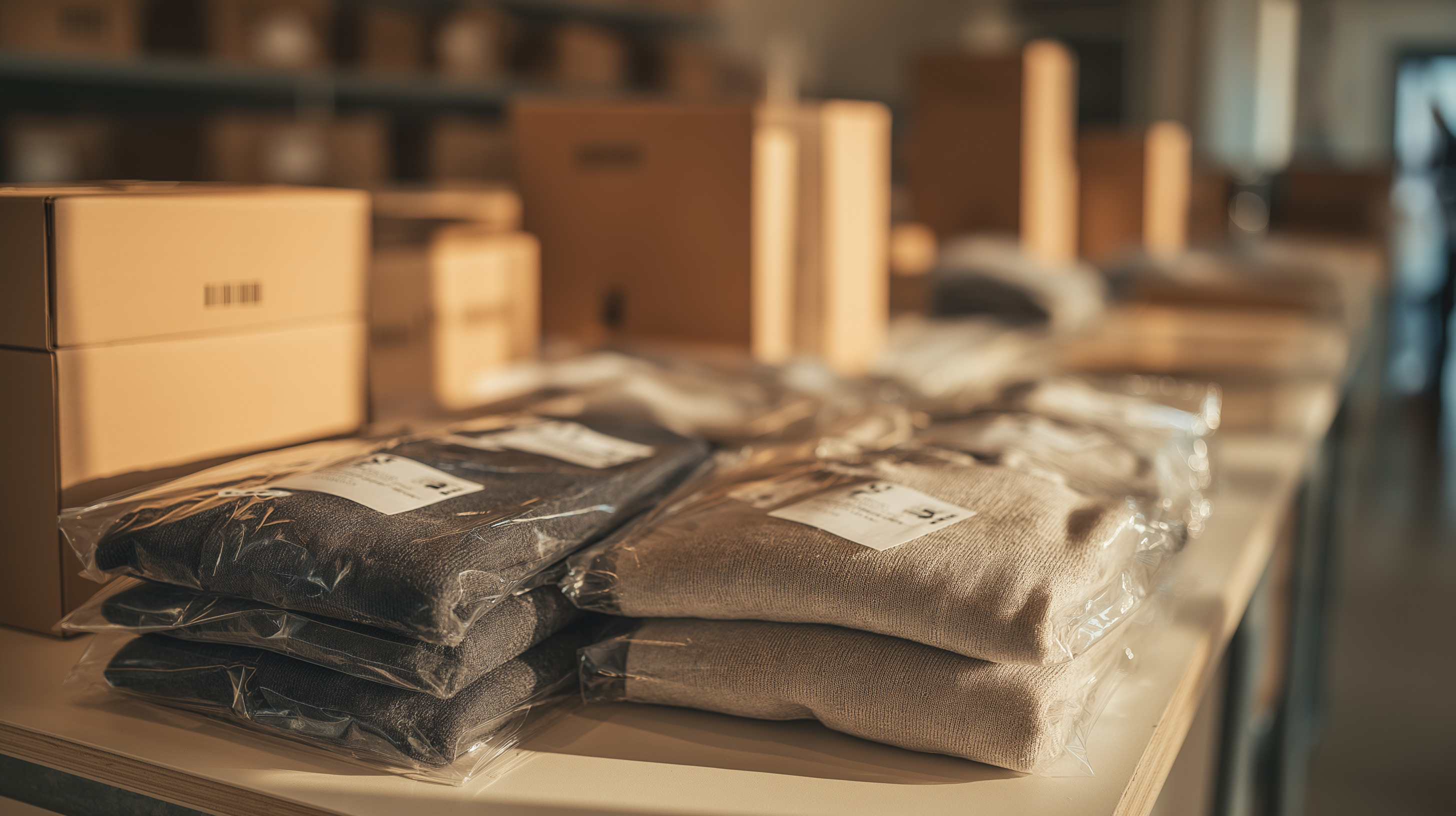
Stock in an office closet gets miscounted, mixed up and damaged, and the wrong size ships. Brandmerch stores it instead.
Inventory
Merch inventory is campaign-driven and seasonal, not perpetual replenishment. The failure is ordering against a count that is already spoken for: fifty hoodies in stock, forty of them committed to next week's onboarding kits. Brandmerch holds the stock, so nobody on your team is counting it.
Pick, pack and ship
A wrong item loses a program's trust; a crumpled hoodie in a battered box loses the brand impression. Brandmerch picks, packs and ships every order to one standard.
Multi-destination fulfillment
Shipping hundreds of individual packages to hundreds of different addresses is where complexity spikes: welcome kits, client gifting, remote teams, regional offices. Brandmerch ships to 220+ countries. The employee welcome kit guide covers address collection in detail.
Kitting
Kitting turns a pile of SKUs into a finished experience: welcome kits, event swag bags, curated gift boxes. Brandmerch runs its own gift-packing operation, so every box leaves looking the same.
Cost
Shipping is the largest line, then storage and labor. Cost breakdowns are on the Brandmerch pricing page.
Choosing a fulfillment partner
Judge partners on five things: can they connect to your ordering system, are they near your recipients, can they kit and personalize, do they show you live inventory and tracking, and can they absorb an event spike without lead times slipping. Brandmerch is built for the hard version of this — large, dispersed organizations with many offices, regions, chapters, affiliates, franchisees or partner brands, where HQ needs control over what semi-autonomous units order. A location cannot spend past its budget, and it connects to Salesforce, HubSpot and your HR system. The event and conference swag guide covers time-sensitive event logistics.
Scaling
What works at one hundred shipments a month does not survive one thousand. Building fulfillment infrastructure yourself is a permanent investment in space, systems and people. Brandmerch is the alternative: volume grows without headcount on your side.
The Brandmerch marketplace carries 575 brands, plus direct-from-manufacturer sourcing and goods you already own, feeding storefronts your teams order from. The learning hub has the rest of the guides. When you are ready to talk through your program, reach out to the Brandmerch team.