The value of a merchandise program depends on the products you choose, the people receiving them, how they're distributed, and how effectively the program is managed.
For businesses investing in branded merchandise, the goal should be to create a program that delivers measurable value while controlling costs and maintaining brand consistency.
Why Branded Merchandise Matters
Unlike digital advertising, branded merchandise gives people something they can use in their everyday lives.
A well-designed jacket, water bottle, notebook, or backpack can provide ongoing exposure for a brand long after it's distributed. Merchandise can also create opportunities for meaningful interactions with customers, prospects, employees, and business partners.
Businesses commonly use branded merchandise to:
- Increase brand awareness: Put branded products in front of customers and potential customers.
- Strengthen customer relationships: Recognize loyal customers, celebrate milestones, and create memorable experiences.
- Support sales and marketing: Provide thoughtful gifts to prospects, event attendees, and business partners.
- Improve employee experiences: Welcome new hires, recognize achievements, and reinforce company culture.
- Maintain brand consistency: Ensure merchandise distributed across departments and locations reflects the company's identity.
The benefits vary depending on the audience, product quality, distribution strategy, and overall objectives.

What Makes a Merchandise Program Successful?
An effective merchandise program requires more than choosing attractive products. It involves coordinating product sourcing, branding, purchasing, inventory, and fulfillment.
1. High-Quality, Relevant Products
The best merchandise is something recipients genuinely want to use.
Consider the audience, intended purpose, product quality, and expected lifespan before making a purchase.
For example, a durable, insulated water bottle may provide more long-term value than several inexpensive promotional items that recipients rarely use.
Higher prices don't automatically mean better results. Product relevance and quality are more important than cost alone.
2. Consistent Branding
Every branded product represents your organization.
Incorrect logo placement, inconsistent colors, low-quality printing, and poorly selected products can create an unprofessional impression.
Companies should establish clear standards for approved artwork, colors, product selection, and decoration methods.
Centralizing these assets helps ensure that merchandise remains consistent across departments, offices, events, and external suppliers.

3. Efficient Purchasing and Inventory Management
Merchandise programs can become expensive when teams purchase products independently without visibility into existing inventory or spending.
Common problems include duplicate purchases, excess inventory, inconsistent pricing, and last-minute orders that increase production and shipping costs.
A centralized merchandise management system can help organizations coordinate purchasing, monitor inventory, establish approval workflows, and track spending.
4. Reliable Distribution and Fulfillment
The value of merchandise also depends on whether it reaches the right people at the right time.
Employee onboarding kits need to arrive when new hires start. Event materials must arrive before an event. Customer gifts should be delivered when they're most relevant.
Reliable fulfillment, accurate inventory records, and clear shipping visibility help reduce delays and unnecessary expenses.
The Hidden Costs of Poor Merchandise Management
The purchase price of branded products is only one part of the total investment.
Organizations also need to account for design, production, storage, shipping, administration, and inventory management.
Common sources of unnecessary spending include:
- Overordering: Purchasing quantities that exceed actual demand.
- Duplicate purchases: Different departments ordering similar items independently.
- Production errors: Incorrect artwork, colors, sizing, or decoration requiring replacement.
- Excess storage: Paying to store products that are rarely distributed.
- Rush orders: Additional manufacturing and expedited shipping costs resulting from poor planning.
- Administrative overhead: Employee time spent coordinating suppliers, tracking shipments, and resolving issues.
For organizations managing merchandise across multiple locations or departments, these costs can add up quickly.
Centralized management can help reduce unnecessary spending and improve operational efficiency.
What Research Tells Us About Branded Merchandise
Research suggests that promotional products can influence brand perceptions, but effectiveness depends on the quality of the product and the context in which it is received.
A study published in the Journal of Advertising Research examined how the quality of promotional giveaways influenced brand perceptions. Its findings illustrate an important distinction: people may remember a promotional product without necessarily developing a positive impression of the company that provided it.
Research published in the International Journal of Advertising in 2021 also found that using promotional merchandise could improve attitudes toward unfamiliar brands in experimental settings. The same results did not extend to familiar brands.
These findings suggest that branded merchandise can support brand awareness and perception, particularly when recipients have limited familiarity with a company.
However, neither study establishes a universal return on investment. Businesses should evaluate how merchandise contributes to their own marketing and operational objectives.
How to Measure Merchandise Program ROI
The return on a merchandise program depends on what the program is intended to accomplish.
A corporate gifting campaign designed to generate sales meetings should be measured differently from an employee onboarding program or a large-scale conference giveaway.
Marketing and Sales Programs
For prospect gifting, customer appreciation, and promotional campaigns, useful metrics include:
- Response rates from gift recipients
- Meetings or sales opportunities generated
- Website visits attributed to merchandise campaigns
- Cost per qualified lead or meeting
- Revenue associated with merchandise-supported campaigns
Unique landing pages, campaign links, and CRM tracking can help connect merchandise distribution to subsequent customer activity.
Employee and Internal Programs
For onboarding, recognition, and employee merchandise, organizations can evaluate:
- Employee participation and feedback
- On-time delivery of onboarding kits
- Program cost per employee
- Merchandise utilization
- Administrative time required to manage requests

Operational Efficiency
Companies with ongoing merchandise programs should also monitor:
- Total merchandise spending
- Inventory turnover and unused stock
- Storage and fulfillment expenses
- Production errors and replacement costs
- Order processing and approval times
- Spending across departments and locations
These metrics help identify whether the program is operating efficiently and where improvements may reduce costs.
How to Calculate the Cost of Your Merchandise Program
To understand the full cost of a merchandise program, include more than the price paid to manufacturers.
Total program cost = Product costs + design and setup + storage + fulfillment and shipping + administrative expenses
For a sales-focused campaign, one useful performance metric is:
Cost per qualified meeting = Total campaign cost ÷ Qualified meetings generated
For example, a company could compare the cost per qualified meeting from a gifting campaign with that of other marketing activities.
Not every merchandise program is intended to generate immediate revenue, so financial ROI should be considered alongside the program's objectives.
How to Improve Your Merchandise Program
Businesses can improve merchandise performance by focusing on a few operational priorities.
- Establish clear objectives. Decide whether the program supports brand awareness, customer relationships, employee engagement, sales, or another business goal.
- Choose products based on your audience. Focus on usefulness, quality, and relevance rather than purchasing large quantities of inexpensive items.
- Centralize brand assets and approvals. Maintain approved logos, colors, and design standards to prevent inconsistencies.
- Consolidate purchasing where practical. Reduce duplicate orders, improve spending visibility, and take advantage of appropriate volume pricing.
- Monitor inventory. Track available stock, distribution patterns, and reorder requirements to avoid overstocking and shortages.
- Evaluate performance regularly. Review campaign results, operational costs, and feedback to identify opportunities for improvement.
These practices are especially important for organizations coordinating merchandise across multiple departments, offices, or locations.
Managing Merchandise at Scale with Brandmerch
As merchandise programs grow, coordinating products, vendors, inventory, and distribution becomes more complex.
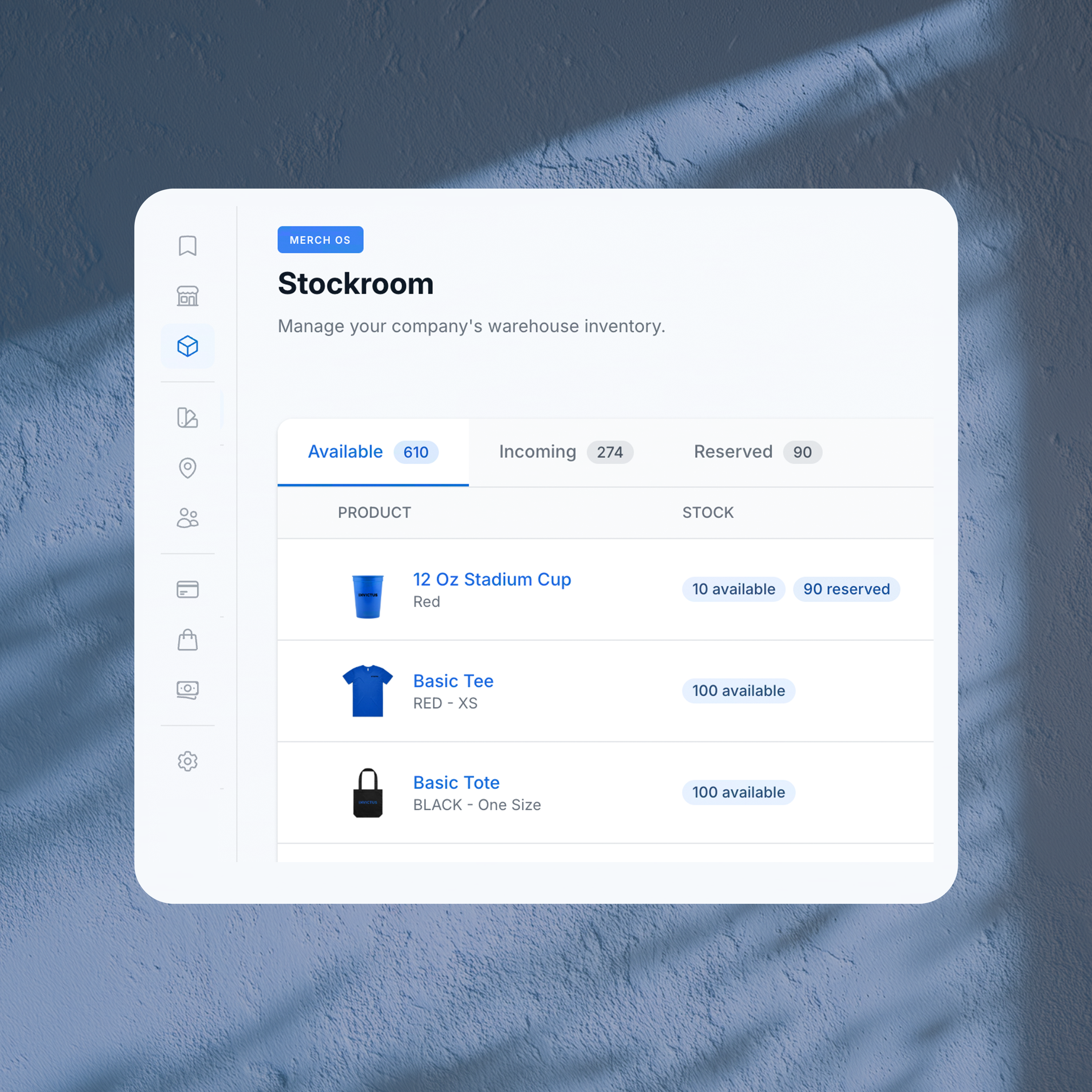
Brandmerch helps organizations manage these activities through MerchOS, a centralized platform for branded merchandise procurement, storefronts, inventory, and fulfillment.
With Brandmerch, teams can:
- Source and purchase branded products through a centralized marketplace.
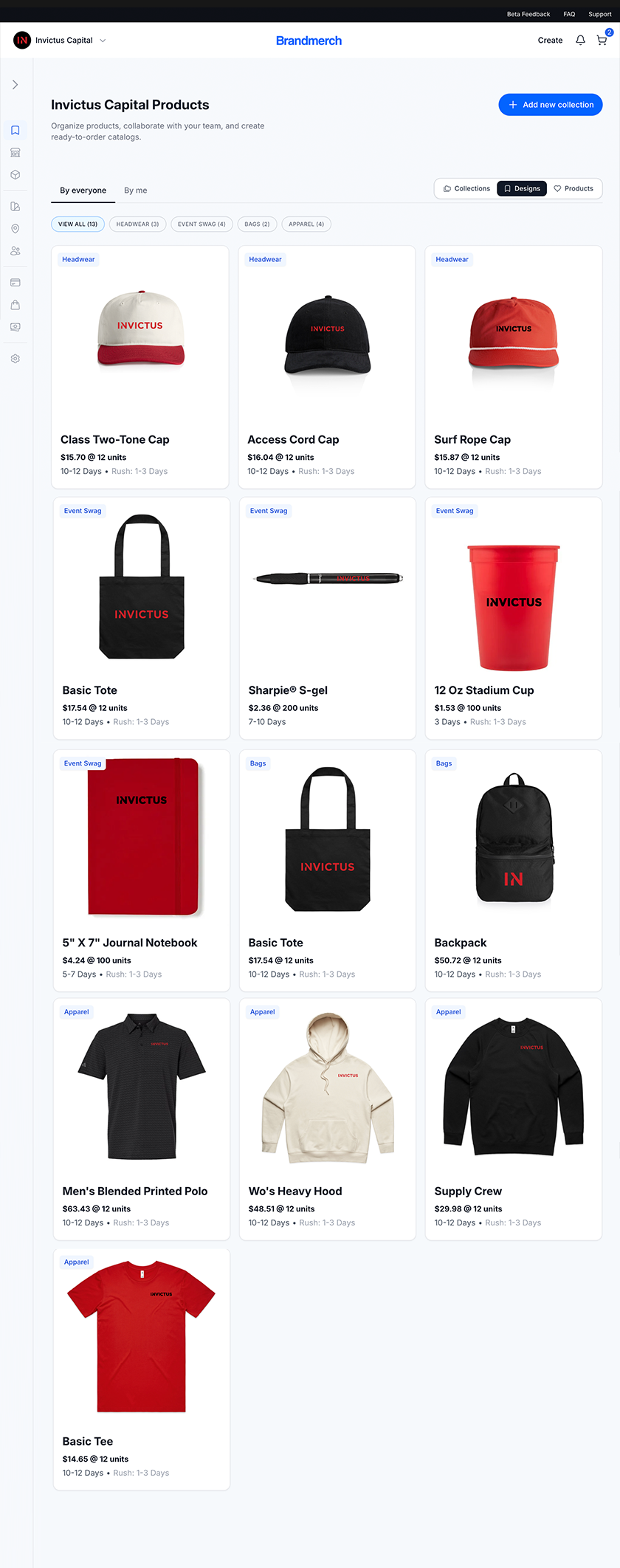
- Maintain approved brand assets and product collections.
- Create branded storefronts for employees, partners, or customers.
- Manage inventory, warehousing, and merchandise distribution.
- Establish purchasing permissions, budgets, and approval workflows.
- Track orders, merchandise spending, and fulfillment activity.
For enterprise organizations, Brandmerch also offers dedicated account support to help coordinate sourcing, production, and ongoing merchandise operations.
The Bottom Line
A successful branded merchandise program is not defined by how many products a company distributes or how much it spends.
Its value comes from choosing the right products, reaching the right audience, maintaining quality, and managing the program efficiently.
By establishing clear objectives, controlling operational costs, and measuring results, businesses can make better decisions about their merchandise investments.
Looking to improve your company's merchandise program?
Explore MerchOS or contact Brandmerch to learn how centralized merchandise management can support your organization.