Companies spend thousands of dollars a year on conference booth swag, and much of it is thrown away before attendees get home. Branded pens, flimsy tote bags, and sticker sheets are common examples. The return is hard to measure when swag is budgeted as a cost of attending rather than planned as part of lead generation.
Whether swag produces pipeline depends more on planning than on budget. Teams that consistently convert booth traffic into qualified opportunities plan event merchandise like any other demand-generation spend: with tiers, targeting, and measurement. The complete guide to event and conference swag covers the full strategic framework; this guide covers how to run it at the booth and after the show.
Why Most Booth Swag Fails
Most swag decisions are made as a purchasing task rather than as part of a lead-generation plan. The brief is usually some version of "we need five hundred of something with our logo for the conference next month." That brief produces generic products chosen for unit cost rather than strategic value.
Generic swag attracts everyone equally. A bowl of branded mints on a table draws foot traffic, including hundreds of attendees who will never become customers. The booth team spends three days scanning badges of people who wanted a free mint rather than a product demo, while the twenty high-value prospects who walked past had no particular reason to stop.
Swag works better when it is used to qualify visitors, not only to attract them. That usually means allocating the budget differently rather than increasing it.
The Tiered Giveaway Strategy
The most effective booth programs operate on three tiers, each serving a distinct purpose in the event funnel.
Tier one: open-access items. These are the products visible from the aisle — displayed on the table or hanging from a rack. Their job is to slow foot traffic and create a reason to pause. A well-designed branded tote bag works here because attendees genuinely need something to carry the materials they accumulate throughout the day. Stickers, small notebooks, and branded snacks also function at this tier. Keep unit costs low — two to five dollars — because volume is high and qualification is minimal.
Tier two: conversation qualifiers. These products are earned through engagement. An attendee gets a tier-two item after watching a demo, answering qualifying questions, or participating in a booth activity. A premium insulated water bottle or a quality branded t-shirt at this level gives attendees a reason to engage. The attendee gives their time for a demo or conversation and receives something they will use. Unit costs at this tier typically run eight to twenty dollars.
Tier three: meeting-close gifts. Reserved exclusively for booked meetings, qualified demos, or high-value prospect conversations. These are premium items — a branded quarter-zip jacket, a curated desk set, or a premium tech accessory — that signal the company values the relationship being formed. These items are never displayed on the table. They come from behind the booth, presented personally after a meaningful exchange. Unit costs of twenty-five to sixty dollars are appropriate here because volume is low and the pipeline value per recipient is high.
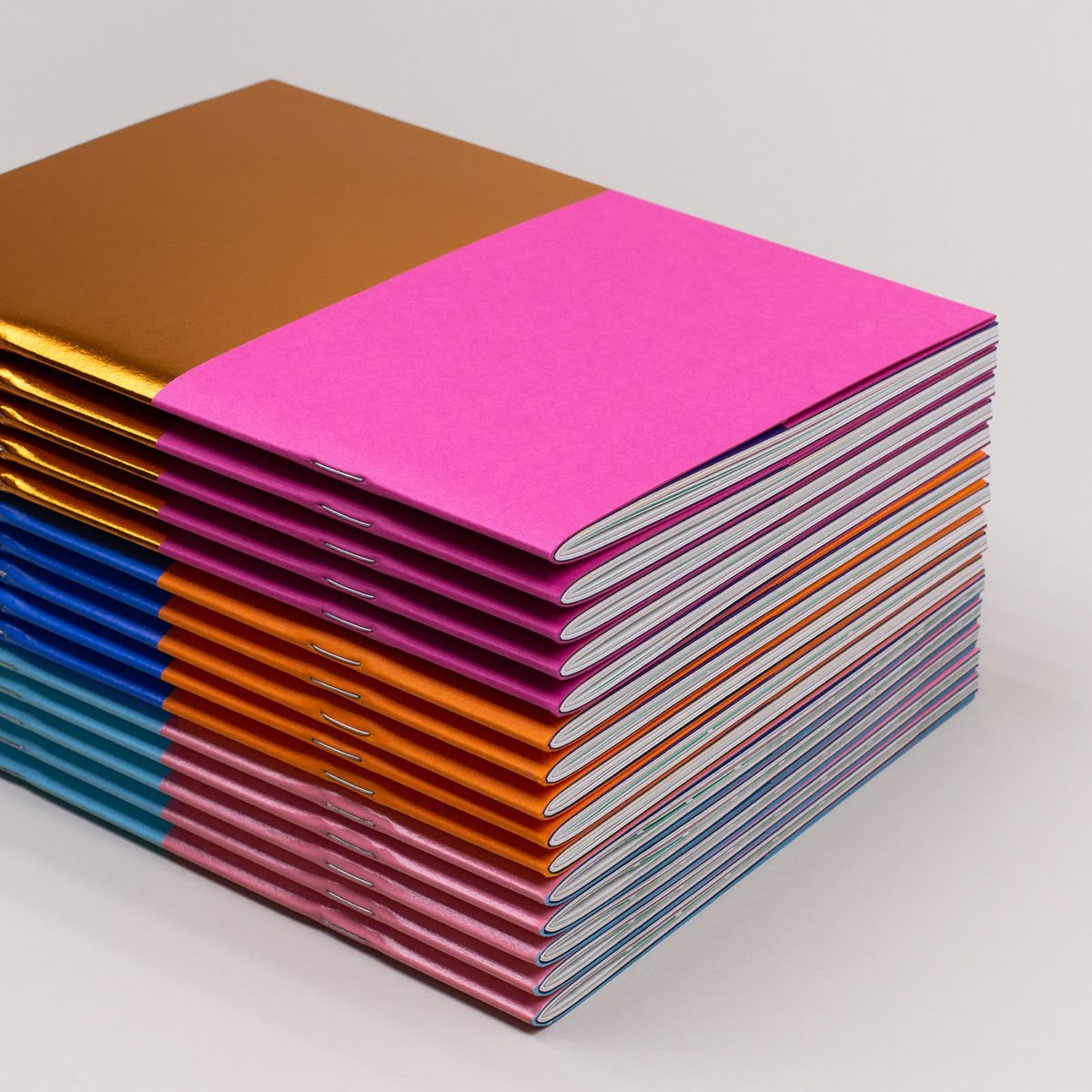
Choosing Products That Start Conversations
Booth swag works best when it gives staff a reason to start a conversation. Products that are visually distinctive, interesting to handle, or unexpectedly useful give booth staff an easy opening that does not feel like a sales pitch.
A custom-dyed hoodie draped over a booth chair invites the question "where did you get that?" A uniquely shaped water bottle prompts someone to pick it up and examine it. A high-quality tote with an interesting design gets carried around the venue floor, where other attendees see it throughout the day.
Product selection should also consider the venue context. Conference centers are cold, so lightweight layers perform well. Attendees carry laptops and materials all day, so bags and organizers have immediate utility. Attendees spend long days on hard floors, so comfortable socks are a useful giveaway. The complete guide to custom branded merchandise explores product selection strategies across dozens of categories and use cases.
Decoration Methods for Event Timelines
Event dates are fixed, so production has to finish on time. If a ship date is missed, the booth has no swag on day one.
Screen printing is the fastest and most cost-effective method for large-quantity apparel runs. If you need three hundred t-shirts in four weeks, screen printing delivers reliably. Embroidery adds a premium feel to quarter-zips and polos but requires slightly longer production windows — plan for five to six weeks minimum. For smaller quantities or highly detailed artwork, direct-to-garment printing offers flexibility without the setup costs of screens.
The main decision is matching the decoration method to the product tier. Tier-one items usually need simple one-color prints that are fast and cheap to produce. Tier-two items benefit from higher-quality decoration — embroidery on a hat, multicolor printing on a bottle. Tier-three gifts warrant the most refined treatment. The screen printing vs. embroidery buyer's guide breaks down quality, cost, and timeline trade-offs in detail, and the decoration methods page covers every available technique.
Pre-Event Logistics and Inventory
Logistics problems at events are hard to fix on site. You cannot overnight three hundred tote bags to a convention center on the morning of day one. Every logistics decision needs to be finalized weeks before the event.
Ship inventory to the venue five to seven business days before the event opens. Confirm the venue's receiving dock requirements — many convention centers require advance shipping labels, booth numbers on every box, and specific delivery windows. Send a packing manifest with each shipment so the booth setup team can verify contents on arrival without opening every carton.
Plan inventory by day, not by event. If the conference runs three days and you expect twelve hundred booth visitors, do not put all twelve hundred tier-one items on the table on day one. Allocate four hundred per day and store backstock off the floor. Assign one team member to track daily burn rates and adjust distribution rules if traffic patterns shift.
Working the Booth: Swag as a Conversation Tool
A tiered swag plan only works if the booth team knows how to use it. Before the event, brief every person staffing the booth on the tier system — what each tier includes, what triggers advancement from one tier to the next, and how to present premium items without making the interaction feel transactional.
Tier-one items should be accessible but not passive. Instead of a bowl people grab from while walking past, have a team member hand the tote to someone and use the handoff as an opening: "Grab one of these — you will need it by the end of today. What brings you to the conference?" This turns the handoff into the start of a conversation.
Tier-two items work as engagement rewards. After a demo or qualifying conversation, the transition is natural: "Let me grab you one of these" — pulling the water bottle from behind the display. Because the item was not on display, it reads as a reward for the conversation.
Tier-three items set up the follow-up. When a meeting is booked or a serious prospect conversation ends, the premium gift gives the follow-up a clear reference point: "This is for you. I will send over the deck and a calendar link this week." The prospect walks away with something valuable, and the booth team has a natural reason to follow up.
Post-Event Follow-Up with Branded Touchpoints
Most pipeline generated at conferences is closed in the weeks after the show, not on the floor, and branded follow-up can improve conversion rates.
Within three business days of the event, send personalized outreach to every tier-two and tier-three contact. Reference the specific conversation from the booth and include a concrete next step. For high-value prospects, consider shipping a follow-up gift — a premium item with a handwritten note referencing their booth conversation. This second branded touchpoint often lifts reply rates significantly compared to email-only follow-up.
Build a post-event nurture sequence that keeps the brand present without being aggressive. A useful resource, a case study relevant to the prospect's industry, or an invitation to a webinar — each accompanied by a subtle reference to the event — maintains momentum through the pipeline. For teams that want to systematize this follow-up, reaching out to discuss fulfillment workflows can help structure the post-event branded touchpoint sequence.
Measuring Booth Swag ROI
Measuring booth swag ROI requires tracking metrics at each tier of the funnel.
Tier one: total booth visitors and badge scans. This measures raw traffic and gives a baseline for engagement conversion.
Tier two: demos completed, qualifying conversations held, and contacts captured. This is the engagement layer — the people who moved beyond a free tote bag into a real interaction.
Tier three: meetings booked, pipeline created, and opportunities influenced. This is where swag investment connects to revenue.
After the event, calculate cost per qualified lead and cost per opportunity by tier. Compare these numbers to your other demand-generation channels. Most teams discover that well-executed booth swag produces qualified leads at a cost-per-lead that is competitive with — and often lower than — digital advertising or sponsored content. That result depends on execution. Giveaways without tiers and measurement tend to produce high badge-scan counts and little pipeline. Swag distributed through a qualifying step and followed by personalized outreach produces a return that can justify the budget each year.